| |||
| Madhurai G. S. Mani Carnatic Music Singer |   | ||
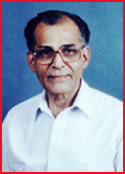 A name from a long time ago. That is literally what the Kalaimamani awards of the Tamil Nadu Government this year threw up. And a long pending honour too, rasikas would say. A name from a long time ago. That is literally what the Kalaimamani awards of the Tamil Nadu Government this year threw up. And a long pending honour too, rasikas would say.
Madhurai G. S. Mani does not look your typical Carnatic music singer. No elaborate talk or high sounding jargon. He looks more like a sprightly executive types (he is 66 though), a little distant, a little businesslike and very comfortable with himself. His flat in Besant Nagar, Madras, is unassuming too. No elaborate artefacts and brass or bells. His wife is cutting vegetables for a delicious smelling lunch in the living room - a common practice in middle-class Madras lifestyle. And she chips in unobtrusively and appropriately with comments during the interview, and shows she has a mind of her own, whether that is to agree or to disagree with him! Mani spoke to KutcheriBuzz at length about his career and his music. And what he stands for. Excerpts: How do you feel about being given the Kalaimamani this year? What is your special bond with Carnatic music? Carnatic music belongs to the people of this country and it is for us practitioners to give the people the classicism. I don't know why this should be denied to them, specially by musicians. But you have been associated with film music too. Is this a dichotomy? But did film music of that era not dilute Carnatic music? And Rahman has brought in western rhythms killing folk. The logic is, the people want it and we are providing it. My sadness is that classical is gone now, and we are denying it to the people. There was a question that someone in the audience asked in a panel discussion on this topic I participated in once. He said " I don't know everything about music, and if I ask for poison will you give it to me?" That is what we are doing now. Giving them poison saying that they want it. In this context tell us about your experiments with taking classical music to the people. Take for instance they sang the song 'Marainthirunthe paarkum...' from Thillana Mohanambal. I would then say, "Do you know that this song is in the raga Shammukhapriya?" They may not have known that, but they could repeat the original song without distortions. And many of them were intrigued when they are introduced to this side, the background and structure of the music they know. So I devised a programme outlining the character and structure of our classical music and related it to film songs. It was first done in Tiruppur30 or 35 years ago. A sabha there called Rasikapriya run by M. S. V. Rajan was where I did this show first. There were 300 people. By the third time there were 1500 people and the police had to be there to make sure there was no problem! They were ordinary people. Not necessarily educated, not necessarily intellectual or elite. It is to all of them that this music belongs and this classicism belongs. I don't know why this should be denied to them, specially by those in the music world. How was the programme structured? Did you sing film songs and tell them what raga it was in? Why should they know. They are enjoying the music without that knowledge. And in your earlier example of people singing a raga based song flawlessly they are also executing well enough without the knowledge, so... An analogy is that if you admire a temple, knowing something about its history and architectural design and style will make you appreciate and understand its grandeur. What happened to the effort later? I am bringing out something similar in CD form in English for the children of our people who are growing up here and abroad with very little to tie them to our culture. It is also available on the paysite numtv.com. Madhurai G. S. Mani can be contacted at C-4, Bayview Apartments, Parvati Street, Besant Nagar, Madras - 600 090. Phone: 0091-44-491 3600. e-mail: gsmani75@yahoo.com
| |||

| • Back to Interviews |
| • Your Contributions |
| • Your Comments |