| ||||
|   | |||
| Portland based dancer Jayanthi Raman is all set to tour the U.S (September-November 2004) with her new production, 'Gajamukha'. The show premieres in Chennai on August 28, at The Music Academy's auditoiurm. The US premier will be at Portland on September 10, as part of the 30-city tour and 7 lectures/workshops.
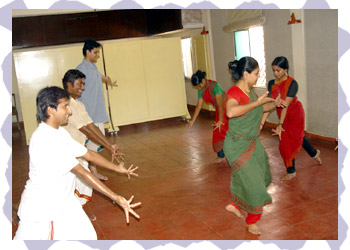
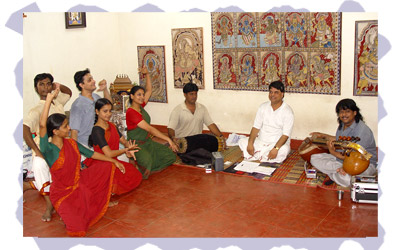
Jayanthi recently received the National Dance Project award, funded by the National Endowment for the Arts in the US, which has funded and supported in creating and touring her production. 'Gajamukha' is themed on lord Ganesha and features Jayanthi Raman alongwith Madras based dancers Narendra Kumar, Sivakumar, Aadith Narayan, Shylaja Sivakumar, Aswini Viswanathan and Preethi Ramachandran. The musicians are vocalist O.S. Arun, veena artiste Rajhesh Vaidhya, flautist V K Raman and percussionists Chenda Kesavan and Ramakrishnan. The music has been scored by five well known musicians - BalamuraliKrishna, Lalgudi Jayaraman, Seetharama Sharma, duo Ganesh-Kumaresh and Rajesh Vaidhya. Lyrics have been composed by Va. Ve. Su and Pappu Venugopala Rao and rhythmic compositions are by dance guru Adyar Lakshmanan. Lighting is by Murugan Krishnan from Chennai. (Visit www.gajamukha.com for more details on the production). Jayanthi Raman who has chorepgraphed the production heads the Natya India dance school in Portland. She is also the Co-Founder of Rasika, a cultural organisation based in Portland and Seattle, that presents music and dance concerts. Just after a rehearsal at her guru Adyar Lakshmanan's dance school in Adyar, Madras, Jayanthi Raman spoke to Aruna. S of KutcheriBuzz about 'Gajamukha' and about the arts scene in the U.S...
What does it feel like to present 'Gajamukha'? Its nice and feels wonderful. But it's a lot of responsibility. It is a big honour since we are performing for the American dance presenters. This is my 10th production, but this is my first big major tour. What is unique about this show? I've adapted everything South Indian for this production. Right from the classical dance styles to the music - both Carnatic and folk, including the percussion instruments. And we have five top musicians involved. And of course the costumes are different. The lighting reflects the technology of the West and the culture of the East. I'm working with my 'dream team'. Why different artistes to score the music? I think its because we wanted different flavours. For example, for the folk, we had Rajesh Vaidhya scoring the music. His personality comes through in the music. And its easy for the dancers to adapt to the folk element. And the music of Ganesh-Kumaresh is so contemporary. It gives a different feel from the 'heavy duty' carnatic music. And he has scored the music for the 'Haasyam' piece. The music reflects his cheerful personality. And we have Lalgudi sir's music which is so spiritual for the finale, where we have an abhishekam and pooja. He has re-created a thillana with the 'Mallari' included. We wanted Sharma sir who has been composing music for Kalakshetra, to score for the main piece on Ganesha. His personality comes through here. And for Balamurali sir's three-note raga using 'sa, ma, pa' we have three classical dance styles - Bharatanatyam, Kuchipudi and Mohiniattam showcased. So, its almost like five ballets in one. And its not just the music, but the rendition that is more important too. So our choice was O.S. Arun. And that's why I like to call it a musical ballet. During rehearsals, we're constantly working with these musicians. And these musicians have given us their time. What inspired you to choose this theme? Ganesha is my favourite deity. And that's why this theme. The story is about Ganesha's birth, the different concepts of the Lord and the simple worship for the Lord. And we have to please a global audience. Its not just Indians or Americans. The audience is a mix. And this is a theme that appeals. There are so many troupes from India touring the U.S at this time of the year. What are your comments? I do not know about the other productions. Ours was planned two years ago. Andour show is planned mainly in the American performing arts circuit. Most of the auditoriums where we will be presenting our production, can seat about 3000 to 4000 people. I do not know about the venues where the other productions are going to be staged. And every Spring and Fall, there are atleast five troupes touring the U.S be it music or dance. How is the audience response in the U.S for such shows? They like purity and classicism still. I'm happy to say that. As far as my productions go I stick to solid 'adavus'. And the audience there don't want to see something novel and weird costumes. What seems to impress the Madras audience today doesn't really impress the U.S audience. They still want classicism and tradition. They get to see the best of Indian artistes. Some dance recitals which I saw in Madras recently will never sell in the U.S For example take Pt. Ravi Shankar. All that he plays is traditional Hindusthani and there is a huge crowd for this. And when we represent India as cultural ambassadors abroad, we shouldn't give them a wrong impression. And that's why I want to showcase the South Indian classical. As co-founder of Rasika, tell us about the U.S. tour circuits that you arrange for artistes from India... These tours are very difficult. People think they are easy but they're really not. Both for the artistes and us. Its hard to put a show together. It is commercial and we have to have popular artistes. We have to see what sells in the U.S And people who have a big name in India, sell well. A lot of artistes have been coming over and over again. And people now want to see new faces. But good faces. And the rasikas don't want to pay a lot, but want to see the best. People here think there is a lot of money there. But the economy is not good. And people there are not willing to spend like what it was five years ago. And now people also travel to Chennai and they see concerts here for free. So back home they dont want to buy tickets. But inspite of all this we survive. The good thing about Rasika is that we get grants from the U.S. government to accomodate the shows. And we present mostly Carnatic music.
What about dance? It is a different thing all together. The problem here is about hosting 10 to 15 member troupes. Especially because the concerts are over weekends and you have to host them for atleast three days in each city. The artistes do accomodate themselves. But its hard to host them. It is a mixed reaction. Meanwhile, the local artistes do put up good shows. We have dancers now all over the U.S and they do put up fabulous shows. Besides, sponsoring dance is very expensive and people are not willing to take a risk. Especially when it a large troupe, plus the accompanying musicians, costumes, stage-props, lighting... everything. Its cheaper for music kutcheris and it is less risky to present an artiste. What about the response for solo dance performances in the U.S? Bad. For example, when one of the top dancers of Chennai performed in Portland, there were about 25 people in the auditorium. She was such a wonderful performer and I loved watching her. But...
You can write to Jayanthi Raman at info@rasika.org For more info, contact: Raman Srinivasan, President, Rasika, 3355 NW Linmere Drive, Portland, OR 97229. Ph: 503-531-7266 www.rasika.org | ||||