| ||||
| Carnatic in Colombo
By Vincent D'Souza |   | |||
|
Arunthathy was with Sri Lanka Broadcasting Corporation for three decades and retired as Head of the Tamil Service. Today, she is actively associated with two interests. Producing cultural shows and teaching Carnatic music at the young University of Visual and Performing Arts, in Kelaniya which is just outside Colombo. It is rare to find a Tamil student on this campus and yet, the carnatic music degree course is gaining popularity ever since it was introduced here in 2001. Nishanta Abeyratne became the first Sinhala student to graduate here and is biding his time to perform in public. All the students here choose Carnatic music as an ancillary subject. "They manage with the theory classes,"says Arunthathy, "but are scared with the pronounciation when it comes to singing." So Arunthathy uses opportuntiies like the annual day to introduce the Sinhalese students how to design and hang thoranams, make flowerpatterns and draw kolams and wear traditional clothes and how to present a concert. "It takes time but they are keen,"she says. Next year, Tamil students will also be admitted to courses here. Eyebrows were raised when Carnatic music was introduced and the idea of admitting Tamil youths were discussed. But there haven't been any sparks of discontent.
The Kelaniya campus is now spreading its wings. For ages, artistes in the Sinhala heartland have been strongly influenced by India's Hindustani classical music and integrated it with the local streams. Now, as more than 300 students attend the ancillary course in Carnatic music at this campus, there could be a new interest in this form. Arunthathy, a veena artiste herself, says that SLBC has chopped the time allotted to Carnatic music and its famed 27member Carnatic music orchestra has disintegrated. A huge gift from India - consisting of various classical music intruments - made to the SLBC, is out of sight, she says. In the capital, Tamil parents who are keen to have their wards trained in Carnatic music, must depend on the few teachers or classes at the Indian Cultural centre on Bauddhaloka Mawatha (Road), funded by the Government of India, where a short course costs Rs.300 (SL) a month. Of late, a private TV channel has been promoting 'Illaya-ganam' a weekly show where young classical music students pitch their talents in an informal contest, like the ones promoted in Tamil Nadu. Arunthathy though sources Indian, Sri Lankan, classical and folk music to produce big travelling shows and brings in Tamil as well as Sinhalese artistes and tours most parts of the island. The Jaffna peninsula is out of bounds as the ethnic troubles erupt, subside and erupt again. The days when Carnatic greats like Maharajapuram Santhanam taught and performed in the peninsula live in the memories of Tamils who are now in their fifties. And yet, the process in the Kelaniya campus, if it works well, could unite the two communities through the arts. | ||||
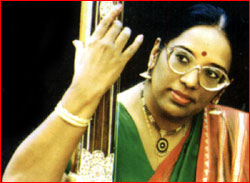 Arunthathy SriRanganathan lives on the seaside of Galle Road, Colombo's widely recognised and prominent road in Sri Lanka's capital.
This is Welawatte and is predominantly Tamil.
Arunthathy SriRanganathan lives on the seaside of Galle Road, Colombo's widely recognised and prominent road in Sri Lanka's capital.
This is Welawatte and is predominantly Tamil.
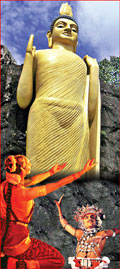 Most Tamil students who wish to pursue courses in classical music and dance, seek admission to the Viplananda Academy in Batticaloa in the islands east or to the Ramanathan College outside Jaffna town.